
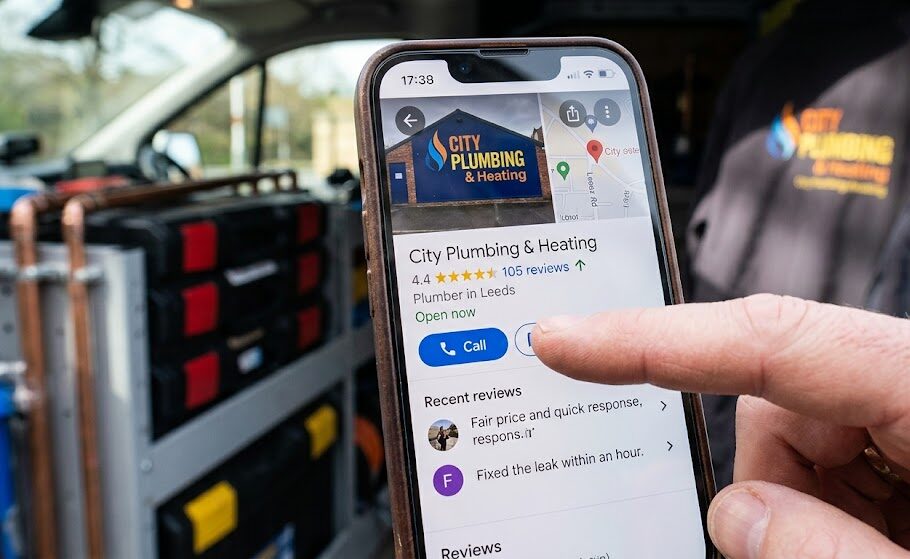
A star rating sits right next to your business name in search results, which makes it one of the few ranking signals a customer actually sees before they click. Deciding is buying google reviews worth it comes down to a straightforward comparison most business owners never actually run: the cost of a review package against the value of the extra calls, bookings or sales that a higher rating tends to bring. This guide builds that comparison step by step, using a real ROI framework rather than a vague promise either way.
Quick Answer at a Glance
Here is the short version before the full framework below.
| Question | Short Answer |
|---|---|
| Does a higher rating change click behaviour | Yes. Consumer research consistently links higher star ratings to higher click through and contact rates. |
| Typical break even point | Often reached within a small number of extra jobs, bookings or sales once the rating shift takes hold. |
| Biggest ROI variable | Your current rating and review count matter more than the raw spend. |
| Where ROI is weakest | A profile already close to five stars with a large review base sees the smallest marginal lift. |
| Where ROI is strongest | A profile stuck below 4.0 with a small review base, where a modest push moves the average visibly. |
Why the ROI Question Is Different From the Legality or Safety Question
Plenty of existing content covers whether buying reviews is safe or legal. Almost none of it answers whether it actually pays for itself once the invoice is settled. Those are separate questions. A safe, compliant purchase can still be a poor investment if it barely moves a rating that customers were not weighing heavily in the first place.
This guide sets those other questions aside and focuses purely on the numbers. A useful ROI comparison needs three inputs: what the package costs, what a rating shift is likely to change in customer behaviour and how long it takes for that change to cover the initial spend.
What Actually Changes When Your Star Rating Moves
Star rating influences two behaviours before a customer ever contacts a business. It shapes whether they click through to the listing at all. It also shapes whether they trust what they find once they get there. Research from BrightLocal’s ongoing consumer review surveys has repeatedly found that a large majority of consumers say the star rating itself is one of the first things they check, often before reading a single written review.
The effect is not linear. Moving from 3.2 to 3.8 tends to change far more customer behaviour than moving from 4.6 to 4.8, since the lower end of the scale sits closer to the threshold where a customer rules a business out entirely rather than simply preferring a competitor. A rating below roughly 3.5 often functions less like a soft preference signal and more like a hard filter, quietly removing a business from consideration before any other factor gets weighed at all.
Building a Simple ROI Formula
A workable formula only needs a handful of numbers most business owners already have on hand. Start with your average order or job value, your current monthly enquiry volume and a reasonable estimate of how much a rating shift might lift your click through or contact rate.
Multiply the estimated extra enquiries by your typical conversion rate and average order value to get a rough monthly revenue lift. Compare that figure against the one time or recurring cost of the review package. When the monthly lift covers the package cost within a small number of months, the purchase is very likely worth it on pure numbers.
A useful habit is running the formula twice, once with a cautious estimate and once with a more optimistic one. The gap between those two outcomes gives a realistic range rather than a single fragile number that falls apart if the actual lift comes in slightly lower than hoped.
Worked Example: A Local Trades Business
Take a plumbing business sitting at 3.9 stars from 45 reviews, receiving roughly 40 enquiries a month with an average job value of 220 pounds and a 30 percent close rate. A package of 60 new five star reviews lifts the rating to roughly 4.4, a jump large enough to sit visibly above several nearby competitors.
If that rating shift lifts monthly enquiries by even a modest 15 percent, that is six extra enquiries a month. At a 30 percent close rate and a 220 pound average job, that works out to roughly 396 pounds of extra monthly revenue. A package priced under that figure pays for itself inside the first month alone, with every following month adding pure upside. This example uses assumed, illustrative figures rather than a specific verified customer result.
Running the same maths a second time with a more cautious 8 percent enquiry lift still produces roughly three extra enquiries and around 198 pounds of added monthly revenue. Even the cautious version clears most package price points within a couple of months, which is why the worked example holds up under scrutiny rather than only working in the optimistic case.
When the ROI Case Gets Weaker
A business already sitting at 4.7 stars from 800 reviews sees a much smaller marginal effect from adding another 60 reviews, since the average barely moves and most customers already trust the profile at that level. The same spend produces far less visible change.
A business in a category where reviews carry less weight in the buying decision, such as a wholesale supplier selling almost entirely through repeat contracts, also sees a weaker case, since the customer decision path rarely starts with a Google search and star rating in the first place. Weighing the category itself before running any spreadsheet maths avoids spending on a lever that was never going to move much for that particular business.
Cost Per Review Versus Cost Per Extra Enquiry
Comparing packages purely on cost per review misses the point. A cheaper package that fails to move a rating meaningfully produces a worse cost per extra enquiry than a pricier package delivered properly and paced to hold. A cheap package that risks removal for looking unnatural is worse still, since the spend disappears along with the reviews themselves.
Working out the real number needed for a specific rating goal, rather than guessing at a round figure, starts with running your own numbers through the calculator before comparing that number against package pricing.
A Second Angle: Reputation as a Buffer, Not Just a Growth Lever
Most of the ROI framework above treats a higher rating purely as a growth lever, something that pulls in extra enquiries that would not otherwise exist. There is a second, quieter benefit worth counting separately. A stronger rating also acts as a buffer against the damage a single future bad review can do.
A profile with 40 reviews at 4.2 stars takes a much bigger visible hit from one new one star review than a profile with 300 reviews at 4.5 stars. The larger, higher rated base absorbs the same bad experience with barely a dent, while the smaller base can drop several tenths of a point overnight. Counting this buffer effect alongside the direct enquiry lift gives a fuller picture of what the spend is actually protecting, not just what it is actively growing.
A Simple Payback Table for Common Scenarios
Running the full formula for every scenario takes time. A rough payback table built from typical UK small business numbers gives a faster starting point before doing the detailed maths for your specific case.
| Starting Rating | Typical Payback Speed |
|---|---|
| Below 3.5 Stars | Often fastest, since the rating sits near a hard cutoff point for many customers. |
| 3.5 to 4.2 Stars | Usually fast to moderate, with a clear visible gap against stronger competitors. |
| 4.3 to 4.6 Stars | Moderate, since the visible gap against competitors narrows. |
| Above 4.6 Stars | Slowest, since additional reviews barely shift an already strong average. |
Checklist: Deciding If Buying Reviews Is Worth It for Your Business
- Check your current rating and review count against nearby competitors, not just against a generic benchmark.
- Estimate your average order value and monthly enquiry volume before running any ROI maths.
- Use a conservative click through lift estimate rather than an optimistic one.
- Compare the payback period across two or three package sizes rather than picking the cheapest by default.
- Weigh whether your category is genuinely review driven before assuming the same ROI applies universally.
- Reassess after the first delivery cycle rather than assuming the initial estimate was exact.
How Buy Social Review Fits Into This
Buy Social Review Team: The team walks new clients through a version of this same ROI framework before recommending a package size, rather than defaulting everyone to the same tier regardless of their starting numbers.
Once the ROI case looks solid, comparing package pricing against your target rating is the natural next step toward a specific number.
FAQs About is buying google reviews worth it
Is there a reliable industry wide average ROI figure for buying reviews?
Not a single universal figure, since the outcome depends heavily on starting rating, review count and category. A payback estimate built from your own numbers is far more useful than any generic industry average.
Does a bigger review package always produce a bigger ROI?
No. Past a certain point, additional reviews add diminishing marginal rating movement, particularly once a profile already sits above 4.5 stars with a sizeable review base.
How long does it typically take to see a return?
It varies by category and starting position, though many businesses with a meaningful starting gap see a measurable shift in enquiries within one to two months of the new reviews settling in.
Does trust matter alongside the revenue number?
Yes. Revenue is the cleanest single number to measure. Reduced customer hesitation and stronger first impressions matter too, even where they do not show up as a single line item on a spreadsheet.
Does the ROI case change for a brand new business with no reviews yet?
Often it strengthens, since a profile with zero reviews faces a much steeper trust barrier than one with a moderate but imperfect rating, making an early review push disproportionately valuable.
Can a business calculate ROI before committing to a specific package size?
Yes. Running the formula in this guide with conservative assumptions before ordering gives a reasonable estimate of payback time for any given package size.
Does seasonality affect the ROI calculation?
Yes, for seasonal businesses. Measuring enquiry lift against the same month a year earlier gives a fairer comparison than measuring against the immediately preceding month if trading volume swings seasonally.
What happens to the ROI case if some purchased reviews get removed later?
The realistic ROI calculation should already account for some review attrition as a normal part of any review campaign, which is why a conservative click through estimate matters more than an optimistic one.
Is the ROI different for service businesses compared with retail?
Often yes, since service businesses frequently rely on a single decisive contact moment. Retail customers can browse multiple signals before deciding, spreading the influence of any one rating across a longer decision path.
Does responding to reviews affect the ROI figure?
It can help indirectly by improving trust and conversion at the margin, though it does not change the underlying star rating average used in the core ROI formula.
Should ROI be reassessed after the reviews go live?
Yes. Comparing actual enquiry volume against the pre purchase baseline a month or two after delivery turns the estimate into a real, measured figure rather than leaving it as a one time guess.
Final Thoughts
Is buying google reviews worth it depends entirely on running your own numbers rather than trusting a blanket yes or no from somewhere else online. A business with a meaningful rating gap and a healthy enquiry volume tends to see a fast, measurable payback, while a business already near five stars sees far less. Buy Social Review can help build the package that fits the actual gap your numbers point to.
Follow Us for More Google Review Tips
If you want more Google Review strategies Local SEO tips and online reputation insights follow our official social media profiles.