
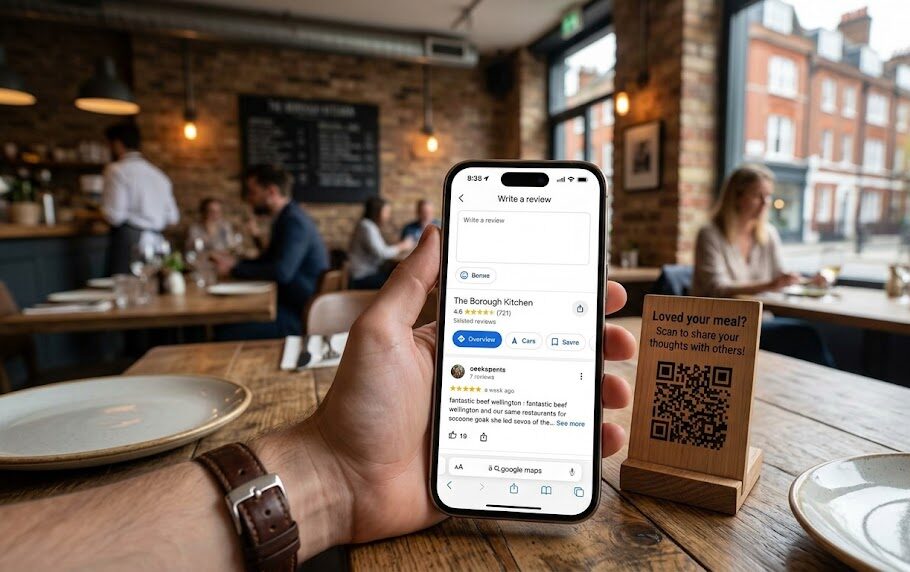
A near empty booking sheet on a slow Tuesday says more about your Google rating than your menu ever will. Diners scroll, compare star ratings and pick the safer looking option in seconds. That is exactly why so many owners start searching for ways to buy google reviews for restaurants uk wide, usually after a quiet month or a new opening with barely any feedback yet. This guide walks through what that search actually leads to, what Buy Social Review offers and where UK law now draws a hard line. By the end you will know what to check before spending a penny.
Quick Answer at a Glance
Here is the short version before the detail.
| Question | Short Answer |
|---|---|
| What it means | Paying a provider to add reviews to your restaurant’s Google Business Profile from outside customers. |
| Typical cost | From $7 for a single review up to $3,500 for 500 reviews, based on the provider’s published pricing. |
| Delivery style | Drip fed, 1 to 10 reviews per day or per week, no login access requested. |
| Biggest risk | UK consumer law now treats undisclosed paid reviews as a banned practice, not a grey area. |
| Safer next step | Read the legal position below, then decide with full information. |
Why Restaurant Owners Look Into Buying Google Reviews
Food and drink is a trust business before it is anything else. Someone choosing between two similar restaurants nearby checks the star rating before the menu. A 3.6 sitting next to a 4.6 changes where the booking goes. Table availability, footfall and even delivery app visibility all lean on that single number.
New openings feel this the hardest. A brand new listing with two or three reviews looks unfinished next to a competitor with three hundred, even when the food is genuinely better. Owners in that position want a fast fix. A page offering to sell reviews looks like exactly that.
It is not always about weak food or service either. One bad night, an unfair one star drop or a slow first quarter can all push a rating down faster than good service pulls it back up. That gap is where buying reviews starts to look tempting.
What Buying Google Reviews for Restaurants UK Really Involves
Buy Social Review’s process centres on real, active Google accounts rather than bots or freshly created profiles. Each account has some history behind it, which is meant to make a new review look ordinary to anyone scanning your profile. You send over your Google Business Profile link. Reviews start landing within roughly a day of confirming the order. The whole approach is built around building a stronger Google review profile rather than a one off spike.
No password or admin access changes hands at any point. That detail matters more than it sounds, since some cheaper providers do ask for login details, which puts your entire profile at risk if anything goes wrong on their end.
How the Process Works
You can write your own review text or leave it to the team, who provide it at no extra cost. Writing it yourself is worth considering for a restaurant specifically. A review that names an actual dish or describes the dining room reads far less like a template than a generic five star line ever could.
What a Typical Package Costs
| Reviews | Price |
|---|---|
| 1 | $7 |
| 5 | $34.99 |
| 10 | $70 |
| 25 | $175 |
| 50 | $350 |
| 100 Best Value | $700 |
Delivery speed is chosen separately from the package, running from a single review a day up to ten a day or a slower pace of one to ten per week for anyone wanting the growth to look gradual over a longer stretch. Full tier pricing up to 500 reviews sits on the comparing review package pricing page.
The UK Legal Picture You Need to Know Before You Pay Anyone
Here is the thing most review selling pages leave out of the pitch: paying for reviews sits inside UK law now, not next to it. The Consumer Protection from Unfair Trading Regulations 2008 already ban misleading commercial practices. Commissioning reviews from people with no real experience of your restaurant falls under that rule.
The bigger shift came with the Digital Markets, Competition and Consumers Act 2024. Since April 2025 it has explicitly banned posting fake reviews, using paid reviews without disclosing them as incentivised and presenting a star rating that gives a misleading overall picture. The Competition and Markets Authority can now fine a business up to 10% of global turnover without needing a court case first. It opened five separate investigations into review practices in March 2026 alone, including one against a food delivery platform. The Advertising Standards Authority can act on misleading review claims too, separately from the CMA.
None of this means every provider selling reviews is breaking the law in every case. It does mean the legal exposure sits with the business paying for the reviews, not only the company supplying them. Worth reading in full before ordering anything: the safety side of buying reviews covers this in more depth.
What Happens If Google Detects Paid or Fake Reviews
Google runs its own detection on top of UK law. In 2025 alone, Google’s systems blocked or removed 292 million policy violating reviews and restricted posting on more than 782,000 accounts. A profile showing a sudden, unnatural spike in five star reviews can get flagged. A flagged listing sometimes carries a visible warning that undoes any credibility a stack of reviews was supposed to build in the first place.
Removal is not instant either. A batch of reviews can sit live for weeks before detection catches up. That is long enough for a diner to book a table based on a rating that will not last.
Restaurants Juggle More Review Platforms Than Most Businesses
Most guides about buying Google reviews treat every business the same. That misses something specific to hospitality. A hair salon or a plumber usually only worries about one review platform. A restaurant does not.
Diners check Google, then often check TripAdvisor before booking a table, then check the star rating again inside Deliveroo, Uber Eats or Just Eat if they are ordering in rather than sitting down. Fixing one number while three others sit untouched creates a mismatch a customer notices within thirty seconds of switching apps.
| Platform | What Diners Check It For |
|---|---|
| Local search ranking and Maps position. | |
| TripAdvisor | Pre-booking research for sit-down meals. |
| Delivery Apps (Deliveroo, Uber Eats, Just Eat) |
Order-time decisions, often made within seconds before placing an order. |
A restaurant that adds twenty Google reviews in a week while its TripAdvisor and delivery app ratings stay flat is not building trust so much as building a story that only holds up on one screen. (You have probably noticed this yourself scrolling between apps before picking somewhere for dinner.)
Time Review Requests to the Moment Diners Are Happiest
Genuine reviews follow a pattern most restaurants ignore. The best moment to ask is not the next morning by email, once the meal is already a vague memory. It is at the table, right as the bill lands, while the food and the service are still fresh in someone’s mind.
A QR code on the receipt or a small table talker pointed at a Google review link converts far better than a follow up text sent six hours later. Staff mentioning it verbally while clearing plates works too and costs nothing beyond a script for the team to use consistently.
This will not replace a review campaign overnight. It does build a review base that matches your actual customer volume. That pattern is exactly the kind that does not attract regulatory or algorithmic attention in the first place.
A Safer Way to Build Restaurant Reviews Without the Legal Exposure
Buying reviews is not the only route to a stronger rating. For many restaurants it is not the fastest either once the risk is counted. Encouraging every table to leave honest feedback, responding to good and bad reviews within a day or two and fixing the service gaps a low rating points to all move the number up without anyone needing to check a law first. This works alongside building reviews the organic way over time rather than instead of it.
This drip fed model is built to sit closer to that natural pattern than a bulk dump of reviews would. Worth weighing up if you are comparing providers rather than comparing buying against not buying at all. Also worth checking against how Google reviews compare with other review platforms if TripAdvisor or Yelp matter more to your bookings than Google does.
A Quick Look at How the Numbers Move
One example already published on the brand’s homepage is worth mentioning here, since it involves a restaurant. Tony’s Italian Bistro moved from 3.8 stars across 60 reviews to 4.7 stars across 891 reviews over the course of a campaign, according to the case shown on that page.
That is a large jump. It is not typical of every account. Profile authority, local competition and the review count a restaurant starts from all change the outcome. The same page notes results vary by category and market, which is worth keeping in mind rather than treating one case as a guarantee.
Checklist: What to Check Before You Buy Any Restaurant Reviews
- Check your current Google rating and total review count first so you know what a realistic target looks like.
- Read the UK legal position above properly before ordering anything.
- Ask any provider exactly how their reviews are sourced, not just whether they are described as “safe”.
- Confirm the delivery pace looks gradual, not a spike of fifty reviews overnight.
- Set a package size against your current review count rather than buying the biggest bundle on offer.
- Keep asking real diners for reviews at the same time, using the QR code or table talker approach above.
How Buy Social Review Fits Into This
Buy Social Review Team: The team has worked with more than 500 local businesses, including restaurants, cafes and independent hospitality brands, building review profiles at a pace designed to mirror organic growth. Its stated approach centres on real, verified Google accounts rather than bots, with no login access requested at any stage of an order.
Not every restaurant needs the same package. A single site with a handful of reviews sits in a different position to a five location group trying to keep ratings consistent across every branch. It is worth speaking with the team directly before choosing a size.
Frequently Asked Questions
How many Google reviews does a new restaurant need to look credible?
There is no official number. Most diners start trusting a rating once it passes twenty to thirty reviews. Trust keeps climbing from there. A brand new listing with two or three reviews often gets skipped over even at a perfect five stars, simply because there is not enough evidence behind it yet. Building toward fifty or more gives a newer restaurant a foundation that looks established rather than freshly opened.
Can I choose what a purchased review says about my restaurant?
Yes. Most providers let you supply the wording yourself or leave it to their writing team. For a restaurant, naming an actual dish, describing the dining room or mentioning a specific member of staff reads as far more genuine than a generic five star line that could apply to any business. Vague, repeated phrasing is one of the easier patterns for both diners and Google to spot.
Will buying reviews get my restaurant’s Google Business Profile suspended?
It can, particularly if reviews arrive in a sudden cluster or come from accounts with no real activity history. Google’s detection systems flag unusual review velocity and account patterns rather than reading each review individually. A slower, staggered delivery pace lowers that risk but does not remove it, since UK regulators can act independently of anything Google decides to do.
Do TripAdvisor or delivery app reviews affect my Google ranking too?
Not directly. Google Maps ranking looks at your Google Business Profile specifically, not your TripAdvisor or Deliveroo score. Indirectly, a mismatch between platforms can still hurt you. A diner who checks two apps and finds two very different pictures of your restaurant trusts neither one fully, regardless of which platform Google itself is reading.
How quickly do new reviews appear once ordered?
Delivery typically begins within about a day of confirming an order, based on the provider’s published process, with the full batch spread out afterward depending on the pace chosen at checkout. A slower pace, such as one or two reviews a day, takes longer to complete but tends to look more natural than everything landing at once.
What happens if a review is later flagged as fake?
Google can remove it, sometimes weeks after it was posted. A pattern of removed reviews can flag the wider profile for closer scrutiny. Under UK consumer law, the business paying for the review carries legal exposure too, not only the company that supplied it. That is part of why the legal section above is worth reading properly before ordering anything.
Is asking customers directly a realistic alternative to buying reviews?
For most restaurants, yes. A short prompt at the table, a QR code on the receipt or a quick word from staff while clearing plates converts well when the meal is still fresh in a diner’s mind. It takes longer to build volume this way than buying reviews does. The reviews that come in carry no legal or platform risk at all.
Can a competitor report my restaurant for suspicious review activity?
Yes, this happens more often than most owners expect in competitive dining areas. Google allows anyone to flag a review or profile for investigation. A sudden spike in five star reviews is one of the easier patterns to spot from the outside. A gradual, staggered approach draws less of that kind of attention in the first place.
Do new positive reviews cancel out old negative ones?
They dilute the impact rather than erasing it. Your overall star rating is an average across every review still live on your profile. Ten new five star reviews lift a rating built on thirty reviews more than one built on three hundred. The old negative review stays visible and readable unless it is removed separately.
What does it typically cost to build up a restaurant’s reviews in the UK?
Costs vary by provider and package size. Based on current published pricing, a single review starts at $7, while a fifty review package runs to $350, with larger bundles available up to 500 reviews. Delivery pace, content customisation and the star rating selected can all affect which package fits a given restaurant’s starting point.
Final Thoughts
Buying reviews for a restaurant is not automatically the disaster some articles make it sound. It is not the risk free shortcut some sales pages promise either. The honest picture sits in the middle. If you decide to buy google reviews for restaurants uk based, know the legal position first, check how the provider actually sources reviews and keep building genuine feedback at the same time so the number holds up. Buy Social Review publishes its pricing and process openly. The team can walk through options directly before you order anything.
Follow Us for More Google Review Tips
If you want more Google Review strategies Local SEO tips and online reputation insights follow our official social media profiles.